Da Hong Pao
Overview
Da Hong Pao, often referred to as the "Big Red Robe", is one of the most prestigious and sought-after teas in the world. Originating from the Wuyi Mountain region in Fujian province, China, it is a variety of oolong tea known for its rich flavor, complex aroma, and profound cultural significance. This tea is considered a treasure of Chinese tea culture and is deeply tied to the natural and historical heritage of the Wuyi Mountains, a United Nations Educational, Scientific and Cultural Organization (UNESCO) World Heritage Site. Its rarity and the legend surrounding its original tea bushes have made Da Hong Pao one of the most expensive teas globally, often valued more than gold by weight.
Origin and Natural Environment
Da Hong Pao is cultivated in the Wuyi Mountain range, a region renowned for its unique terroir and biodiversity. The Wuyi Mountains, spanning the border of Fujian and Jiangxi provinces, are characterized by their Danxia landforms, which include red sandstone cliffs, deep valleys, and emerald-green waters. These natural features create a microclimate ideal for tea cultivation, with mineral-rich soils, high humidity, and misty conditions that contribute to the tea's distinctive flavor profile.
The Wuyi region is home to a variety of endemic plant species and rich biodiversity, making it a significant area for conservation. The tea bushes of Da Hong Pao are grown on rocky cliffs, earning it the nickname "rock tea" or "yancha". This rocky terrain imparts a unique mineral quality to the tea, enhancing its flavor and aroma. The original Da Hong Pao bushes, believed to be centuries old, are located in a protected area of the Wuyi Mountains and are considered a national treasure of China.
Historical and Cultural Significance
Da Hong Pao is deeply rooted in Chinese history and culture. The Wuyi Mountains themselves have been a cradle of Neo-Confucianism and a center of academic and philosophical thought for centuries. The region's cultural heritage includes ancient temples, study centers, and archaeological sites, such as Han City and the Ziyang Academy of Classical Learning. These historical landmarks highlight the area's importance as a hub of intellectual and spiritual activity.
The tea's name, "Big Red Robe," is derived from a legend that tells of an emperor who gifted a red robe to the original tea bushes after the tea cured his mother's illness. This story has been passed down through generations, adding to the mystique and allure of Da Hong Pao. The tea has also been celebrated in Chinese art, literature, and music, symbolizing refinement, health, and cultural sophistication.
Characteristics and Production
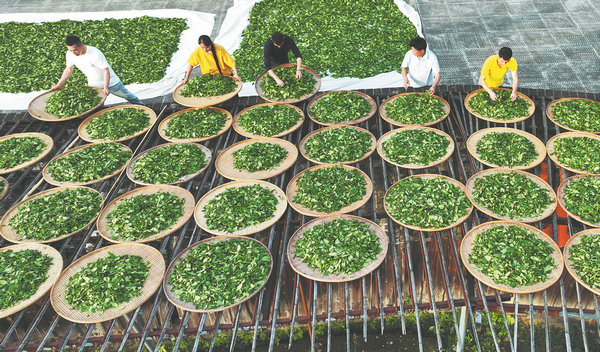
Da Hong Pao is a semi-oxidized oolong tea, striking a balance between green and black teas in terms of flavor and processing. The tea leaves are carefully handpicked and undergo a meticulous production process that includes withering, rolling, oxidation, and roasting. This intricate process results in a tea with a rich, full-bodied flavor, floral and fruity notes, and a lingering mineral aftertaste.
The tea's appearance is marked by dark, twisted leaves that unfurl to reveal a reddish-brown hue when brewed. The liquor is amber in color, exuding a complex aroma that combines floral, woody, and roasted elements. The flavor profile of Da Hong Pao is often described as smooth, with a natural sweetness and a hint of smokiness, making it a favorite among tea connoisseurs.
Due to the limited yield of tea bushes growing in the rocky terrain, authentic Da Hong Pao is rare and highly valued. Tea made from the leaves of the original bushes is considered priceless and is often reserved for special occasions or as a diplomatic gift. Commercial-grade Da Hong Pao, produced from cuttings of the original plants, is more widely available but still commands a premium price.
Legends and Stories
The legend of Da Hong Pao adds to its mystique and cultural significance. According to the most famous tale, an emperor's mother was gravely ill, and no medicine could cure her. A monk from the Wuyi Mountains presented the emperor with a tea brewed from the leaves of a particular bush. After drinking the tea, the emperor's mother miraculously recovered. In gratitude, the emperor ordered that the bushes be draped in red robes to signify their importance and bestowed the name "Da Hong Pao" upon the tea.
Another legend speaks of the tea's connection to immortality and divine intervention. It is said that the tea bushes were blessed by celestial beings, imbuing the tea with extraordinary healing properties. These stories have been passed down through generations, enhancing the tea's reputation as a symbol of health, longevity, and spiritual enlightenment.
Modern Appreciation and Global Influence
In modern times, Da Hong Pao has gained international recognition as a symbol of Chinese tea culture. It is often featured in tea ceremonies, fine dining experiences, and cultural events. The tea's unique flavor and cultural heritage have made it a favorite among tea enthusiasts worldwide, and its rarity has elevated it to a status symbol in the world of luxury goods.
Da Hong Pao has also inspired culinary innovation, with chefs incorporating its flavor into dishes and desserts. For example, Da Hong Pao-infused dishes, such as crispy pigeon leg and tea-flavored desserts, have become popular in high-end restaurants. The tea's versatility and rich flavor profile make it an ideal ingredient for both traditional and modern culinary creations. Article reference1. Yes, that's it, it's always tea time. chinadaily.com.cn. 20242. Mount Wuyi. chinadaily.com.cn. 2018Photo Gallery(6 pictures)CategoriesCultural HeritageTagChinese TeaIntangible Cultural HeritageRelatedSix Major Categories of Chinese TeaOolong TeaWuyi MountainCatalogue1. Overview2. Origin and Natural Environment3. Historical and Cultural Significance4. Characteristics and Production5. Legends and Stories6. Modern Appreciation and Global Influence- - - []








